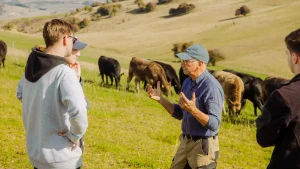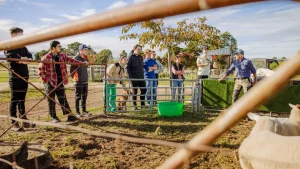
Sustainable farming in Tasmania is more than a concept. It is something you can experience first-hand when you step onto Mudbar Farm. Located just outside Launceston in White Hills, our farm reflects a thoughtful approach to growing food, raising animals and caring for the land in a way that supports both quality and long-term sustainability.
Every part of the farm is shaped by a simple idea. If you respect the land, work with the seasons and focus on quality over quantity, the results speak for themselves. From the way crops are grown to how livestock are managed, our goal is to create a balanced system that supports both the environment and the food it produces.
What sustainable farming in Tasmania means to us
At Mudbar Farm, sustainable farming in Tasmania is about making decisions that protect the land while producing high-quality food. It is not about shortcuts or quick fixes. It is about consistency, care and a strong connection to the natural rhythm of the farm.
Tasmania’s climate offers incredible growing conditions, but it also requires adaptability. Weather patterns can shift, and each season brings its own set of challenges. Instead of working against these conditions, we embrace them. This approach allows us to maintain a steady supply of fresh produce while keeping the land healthy and productive.
Our focus is on building a system that works over time. That means improving soil health, supporting biodiversity and ensuring that everything we grow or raise is done with care.
How we care for the land every day
Soil health and crop rotation
Healthy soil is the foundation of sustainable farming. At Mudbar Farm, we prioritise soil care through crop rotation and careful pasture management. Rotating crops such as lucerne, chicory, rye grass, clover and sorghum helps maintain nutrient balance and supports long-term productivity.
This approach not only improves soil quality but also reduces the need for artificial inputs. Strong, healthy soil leads to better crops, better pasture and ultimately better food.
Working with water and seasons
Water management plays a key role in how the farm operates. Irrigation systems are designed to support plant growth while using resources efficiently. Visitors can see how water is managed across the property, giving a clearer understanding of how farming systems function behind the scenes.
Seasonal planning is just as important. Some months are ideal for growing fresh greens and herbs, while others are better suited to slower, more resilient crops. By aligning our work with the seasons, we ensure that the farm continues to produce high-quality ingredients throughout the year.
Livestock and sustainability go hand in hand
Sustainable farming in Tasmania is not just about crops. It is also about how animals are raised and integrated into the farm system. At Mudbar Farm, livestock play an essential role in maintaining balance.
Sheep, lambs and cattle graze on nutrient-rich pastures, contributing to a natural cycle that supports soil health. As they graze, they help fertilise the land, creating a system where everything works together rather than separately.
Visitors have the opportunity to see these animals in their natural environment. Depending on the tour, there may also be supervised interactions, offering a closer look at how livestock are cared for and how they contribute to the overall farm ecosystem.
The importance of seasonal produce
One of the most rewarding aspects of sustainable farming in Tasmania is seasonality. The farm changes throughout the year, and each season brings its own unique produce.
From fresh greens and herbs to heartier vegetables, what is available depends on the time of year. This natural variation is what gives farm-grown food its depth of flavour. It also encourages a more mindful approach to eating, where meals are shaped by what is in season rather than what is always available.
Harvest periods are particularly special. They reflect the effort that goes into months of preparation and care. It is during these times that the farm truly comes to life, showcasing the full range of what sustainable farming can produce.
Experience sustainable farming in Tasmania
Guests can walk through paddocks, see seasonal crops, learn about irrigation systems and observe livestock in a working farm environment. The experience is designed to be informative, relaxed and grounded in reality.
For many visitors, it is an opportunity to reconnect with where food comes from and gain a deeper appreciation for the work that goes into producing it.
Sustainable farming in Tasmania is best understood by seeing it in action. If you are looking for a meaningful farm experience near Launceston, Mudbar Farm offers a chance to step into a working farm and explore the connection between land, food and sustainability.